
Agricultural, Blogs
Agricultural Tractor Alternators: A Farm Machinery Replacement Guide

Nov
What is an Agricultural Tractor Alternator?
An agricultural alternator is an alternator on a tractor or farm machine which generates electricity as the engine is running. It’s responsible for charging the battery and powering the various electrical items on the machine (headlights, dash board etc).
You can think of it as a small power generator built into the machine. As the engine is running the alternator is there to supply the power required to run the machine.
Understanding the role of Agricultural Tractor Alternators is essential for maintaining efficient farm machinery.
Table of Contents
Alternator vs. Dynamo: Why Alternators Took Over
Older tractors used a dynamo, which is also called a DC generator. Dynamos did the job, but they were heavy, wore out faster, and made very little power at low engine speeds. A tractor idling at the end of a row would hardly charge the battery at all.
Alternators fixed these problems. They are lighter, more reliable, and produce good power even at low engine speeds. They also handle the heavy electrical demand of modern machines, which is why almost every tractor today uses Agricultural Tractor Alternators.
Types of Agricultural Machinery Used on Canadian Farms:
- Tractor – Used for ploughing, pulling equipment, and transporting materials.
- Combine Harvester – Used to harvest crops such as wheat, corn, and soybeans.
- Baler – Compresses hay or straw into bales.
- Seed Planter – Plants seeds in the soil.
- Agricultural Sprayer – Applies fertilizers, pesticides, and herbicides.
- Forage Harvester – Cuts and collects crops for animal feed.
- Plough – Prepares the soil for planting.
- Cultivator – Loosens soil and controls weeds.
- Grain Cart – Transports harvested grain across the field.
- Skid Steer Loader – Moves soil, feed, and other farm materials.
How a Tractor’s Electrical System Works
A tractor needs electricity to start the engine, to run the lights and to power all the various bits of electronic equipment. So where do the electrics come from?
Think of the tractor’s electrical system as a team of four: the battery, the starter, the alternator and the wiring. Each one has a job to do, but they all work together to get the tractor running.
1. Battery – The Water Tank
The battery stores the electrical energy until the tractor needs it. You turn the key and the battery supplies the power to start the engine.
Think of the battery as a water tank which stores water for later use. It’s the same with the battery, it’s a store of electricity for the tractor.
2. Starter – The Machine That Gets Things Moving
When you turn the key the battery sends the electricity to the starter and the starter uses that to turn the engine until it starts.
Think of it as opening the valve on a water tank to send the water to a machine which then does the work.
3. Alternator – The Water Pump
Once the engine’s running the alternator comes into play and starts to generate electricity. It feeds power to the tractor’s electrical equipment and also recharges the battery.
Think of the alternator as a water pump which refills the tank as the system is running. In simple terms it’s there to replace the electrical energy that the battery is using up during starting.
4. Wiring – The Pipes
Wiring connects the battery, the starter, the alternator and all the other electrical bits. It’s the bit that carries the electricity from one component to another so that everything can work.
Think of the wiring as the pipes that carry the water between the tank and the pump. Without those connections the various bits and pieces can’t pass the electricity to each other.
Main Parts of a Tractor Alternator
Think of an alternator as a small team all working in a metal box. Some bits generate the electricity, some bits clean it up and some just keep the whole thing turning smoothly. Here’s who does what.
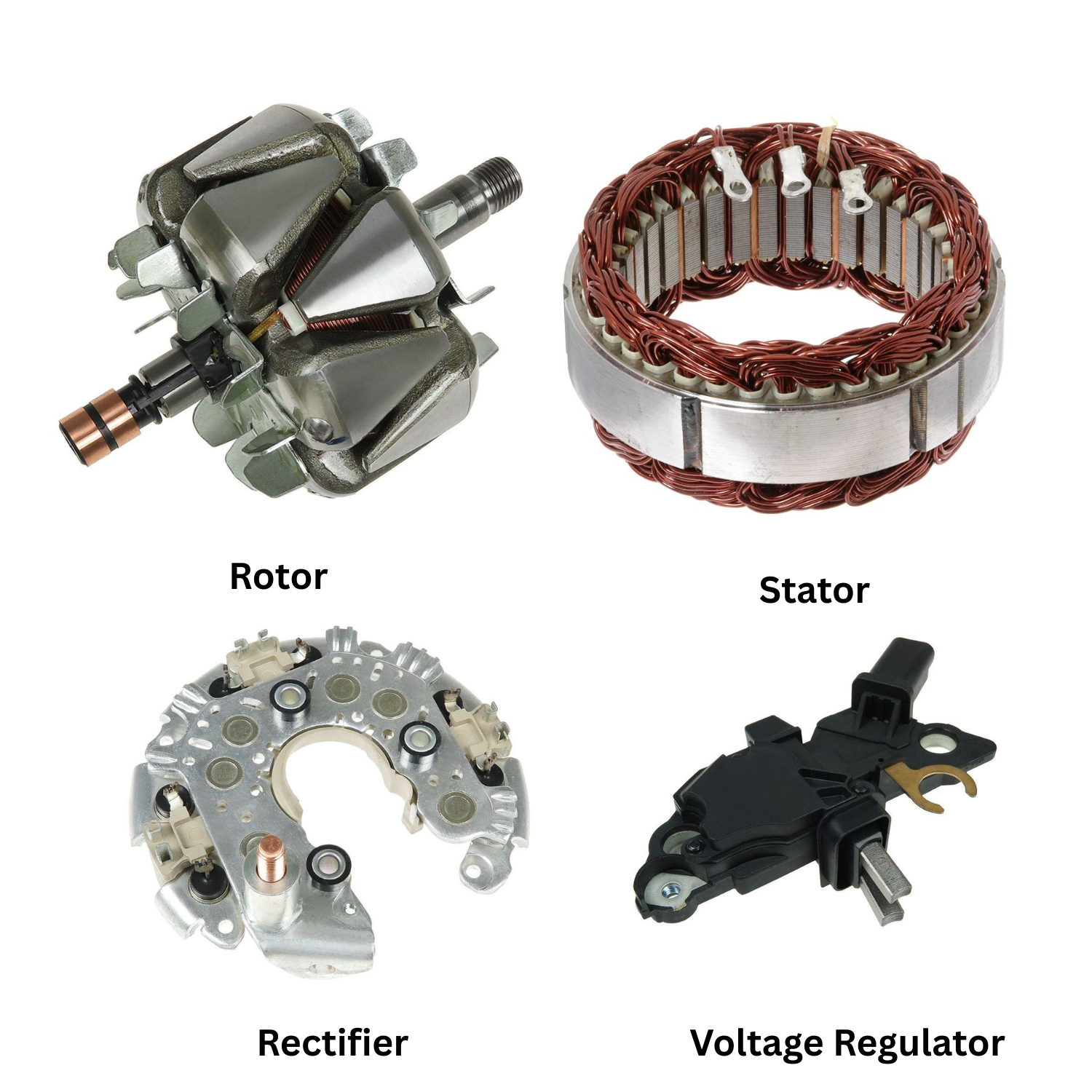
- Rotor: spins inside the alternator and creates a rotating magnetic field. It’s essentially a magnet spinning round and round very fast, turned by the tractor engine via the belt.
- Stator: stays still and generates the electricity as the magnetic field moves past its copper coils. It’s essentially a coil of wire waiting for the magnet to go by. That’s where the electricity is actually generated.
- Rectifier (diodes): Converts the AC into DC so the battery can use it. A one way gate really, allowing the current to pass in only one direction.
- Voltage regulator: keeps the alternator’s voltage output in the right range. It’s essentially like a thermostat at home in that it stops the alternator making too little or too much.
- Brushes: in the brushed designs they pass a small electrical current to the spinning rotor. They’re essentially tiny contact points which maintain the connection and wear quite slowly.
- Bearings support the rotor shaft and enable it to turn smoothly with minimal friction (they’re essentially the wheels of the cart). Without them the shaft would grind and overheat.
- Pulley: Takes the turning force from the engine belt and spins the rotor. It’s a small pulley that the belt engages with to transmit the engine’s power to the alternator.
- Cooling fan: pulls air through the alternator to carry the heat away. Prevents the alternator from overheating, particularly in dusty fields.
- Housing: holds all the internal bits together and protects them, essentially a robust shell around everything inside.
How They Work Together
When the engine is running the belt turns the pulley which in turn turns the rotor. The magnetic field of the rotor sweeps past the stator and that produces the electricity. That’s AC so the rectifier converts it to DC. The voltage regulator keeps the output at a constant level so the battery gets a good charge. The bearings of course keep everything turning, the fan keeps it cool and the housing keeps it all in.
Why Does Farm Machinery Need Electricity?
Modern farm machinery requires electricity for a whole lot more than just starting the engine. You need it to run all sorts of equipment and to carry out the day to day running of the farm.
For instance tractor headlights and LED work lights provide visibility when you’re working in the early morning or after sunset. The dashboards will provide the operator with a good deal of information on the machine and GPS will assist with guiding the tractor across the field.
Other equipment, such as cabin air conditioning, electronic controls, sensors, and automatic steering systems, also requires electrical power. Combine harvesters, sprayers, and other agricultural machines use electrical components to monitor and control different operations.
The battery provides stored electricity, while the alternator generates electricity when the engine is running and helps recharge the battery.
Without a reliable electrical supply, many of these systems may stop working properly. This is why the alternator is an important part of modern agricultural machinery, helping farmers operate their equipment throughout demanding working seasons.

Types and Ratings
Alternators are not one-size-fits-all. The two key specifications are system voltage and amperage output. Most tractors use a 12-volt system, while some larger or heavy-duty machines use 24 volts though some use 24 volts for starting and 12 volts for accessories.
The amp rating indicates how much current the alternator can produce. A small tractor may be fine with a standard unit, but a machine running GPS, air conditioning, and multiple work lights may need a higher-output alternator. If its output cannot meet the combined electrical demand especially at low engine speed the battery must make up the difference, leading to gradual discharge and premature battery wear.
Why Farm Conditions Are So Hard on Alternators
Farm work can be tough on electrical parts. Dust and dirt can build up around the cooling fan, while constant vibration puts extra stress on the bearings and electrical connections. During the busy harvest season, high temperatures can put even more strain on the alternator’s internal components. Moisture, mud, and changing weather can also lead to corrosion. When you add long working hours and freezing Canadian spring mornings, it’s easy to understand why tractor alternators can wear out over time.
Related Posts


